

We are coming up to International Mediation Awareness Week (IMAW) 2026, which runs from Monday, 9 November to Friday, 13 November 2026. The idea is to highlight how mediation resolves disputes without going to court. Having a public awareness week is useful, but it’s not enough in itself to deal with the problem. Here are some ideas that individual mediators might do differently.
Low market demand
Dr Emily Skinner’s PhD research looked at how the conflict resolution field markets itself. She described the field as having “a high supply of providers, low market demand, and high social need”. Many people are in conflicts that mediation could help with. Many mediators are ready to help. Too few of the first group find their way to the second.
Skinner put much of the gap down to how people understand conflict. She interviewed career practitioners and millennials, and both groups saw conflict as negative. If conflict feels like failure, asking a stranger for help with it is uncomfortable.
Knowing that mediation exists does not seem to close the gap. In January 2025 the Family Mediation Council surveyed just over 1,000 adults in the UK. Two thirds knew family mediation was an option after separation. Asked where they would go first for help, 45 per cent said a lawyer and only 30 per cent said a mediator. A mediator is not the top of the list for people to ask for help in the UK, and I suspect it is similar in Australia although I couldn’t find any data on this. I’m not sure most Australians could describe exactly what happens in a mediation or how a mediator might help them.
An unknown institution
Even when people know that something called mediation exists, few know exactly what it involves. Professor Elizabeth Stokoe calls this the “unknown institution” problem.
A person with a broken arm knows to go to a hospital emergency department. They also have a general idea of what will happen there. A doctor will examine them, they will have an x-ray, and they will leave with a cast and some painkillers. A person in a long-running dispute with a neighbour or a work colleague probably has no idea how a mediator could help them.
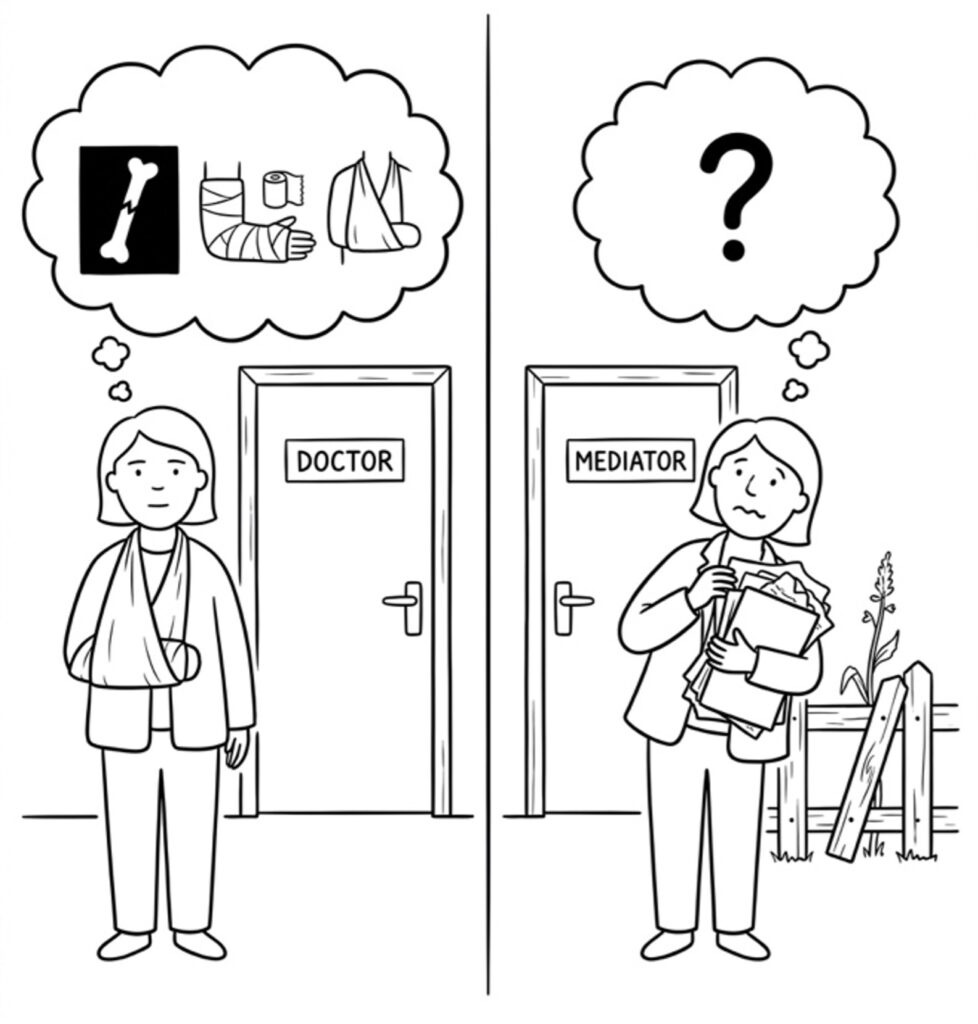
Even people who think they know mediation may have it wrong. There are so many variations (different models of mediation, different styles of practitioners, different choices practitioners may make about process variations). I’m sure many of us have had the experience where someone says “I’ve been to mediation before” and when you ask them to describe what happens you think “I don’t run my mediations like that”! Not understanding that there are different models, different purposes, different styles, etc. makes it very hard for a prospective client to choose the mediator who is best for them.
Telling mediators apart
In Australia, we have national standards for mediators (although you can practice as a mediator even if you are not accredited through this system as it is voluntary and an unregulated profession). Family dispute resolution practitioners have their own accreditation. Only they can issue the certificate most parents need before applying for parenting orders.
For prospective clients, seeing evidence of that accreditation on a mediator’s website probably gives some level of reassurance that this person knows what they are doing. But it doesn’t tell us much more.
Some mediators explain the model that they use on their marketing materials, but again, a lay client won’t know the difference between facilitative, evaluative, transformative, narrative or settlement mediation. These labels mean a lot to us and very little to the people choosing. And most mediators do not clearly identify the model that they use, they simply describe themselves as offering “mediation”. Prospective clients choose on what they can judge: price, location, a recommendation, or whether the website looks professional.
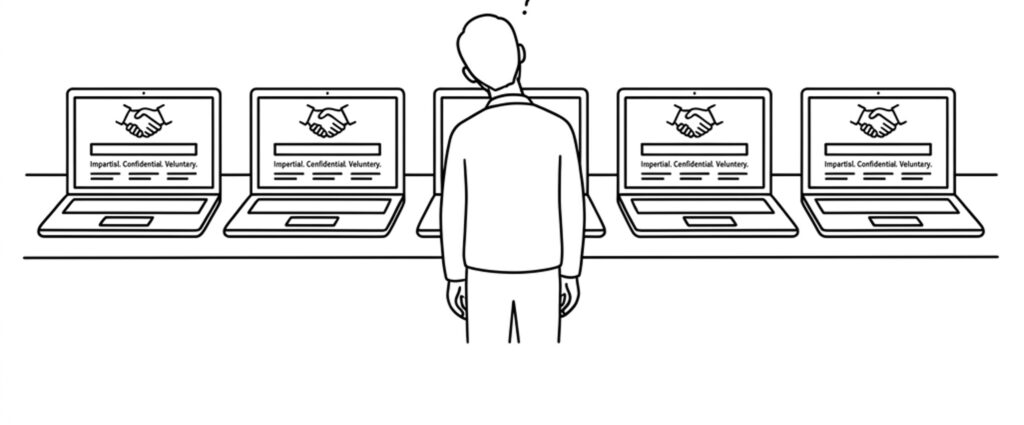
The bigger problem is, however, that most mediators’ websites don’t actually make mediation sound like an attractive option!
Mediation doesn’t sound attractive
When people do hear what mediation involves, the description often puts them off. Professor Stokoe found that many mediators explain their practice by describing the ethos, not what they actually do. They say things like: we are impartial, we don’t take sides, we don’t judge, it is voluntary, you make your own decisions. Mediators describe the ethos because they think it reassures people, but Professor Stokoe’s research found that it does the opposite. It is not what people in conflict want.
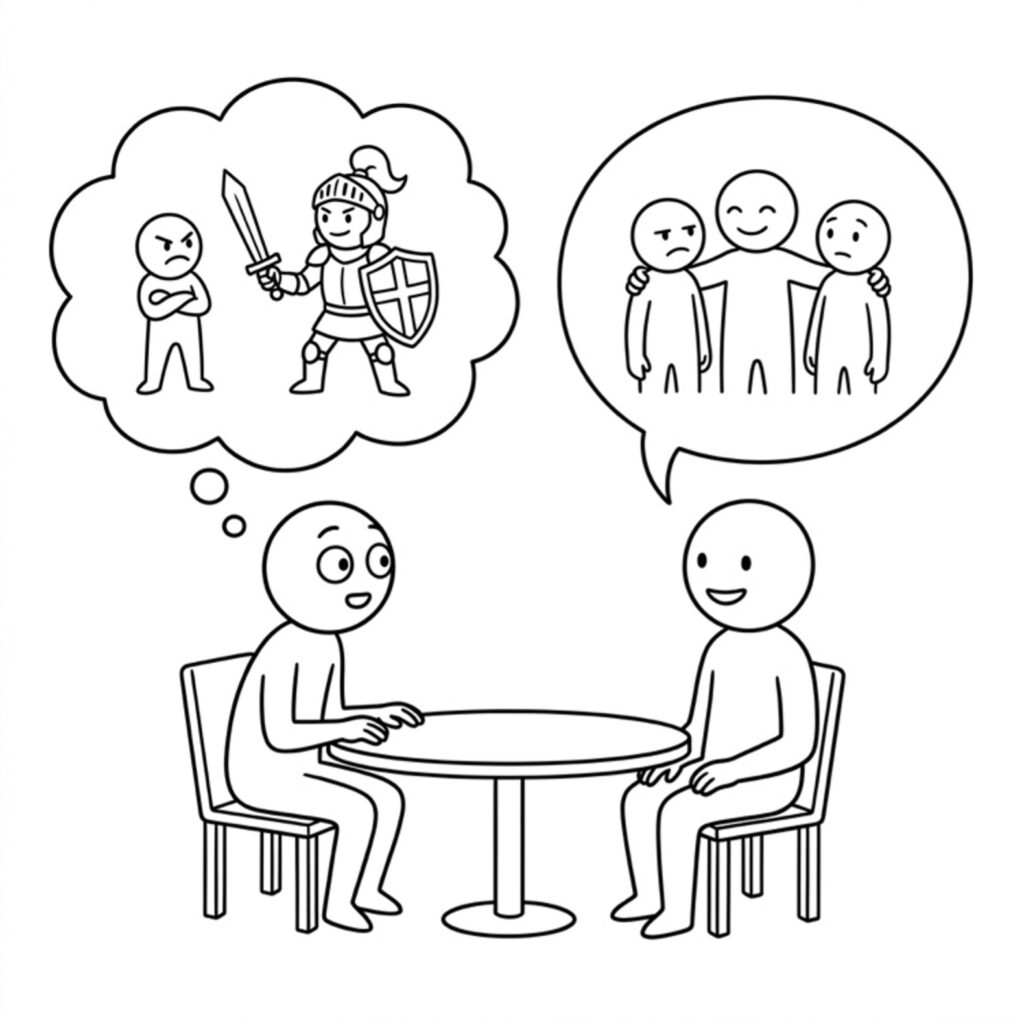
In the heat of a conflict, people want someone on their side. They want someone to help make the other person listen to them and change. They want justice (even though their idea of what justice looks like might be misguided and come with a lot of downsides). Most people in conflict have already tried, in some way, to talk to the other person, or they are too afraid to try. Described as a chance to talk, mediation sounds like more of what has failed. Mediation also requires the client to “put their head above the parapet” by actively engaging in the conflict, when laying low seems safer.
Why a lawyer sounds better
Lawyers are better known than mediators, and that is part of why many people would go to one first. What a lawyer offers also sounds better to someone in the middle of a conflict.
Someone on your side. A lawyer is your advocate and starts by believing your account. A mediator starts by saying they won’t take sides.
Your version of events counts. A lawyer turns your experience into a claim against the other person. You are the one who was wronged. Mediation describes the same situation as a dispute between two people, which puts you inside the problem. Stokoe (2013) also notes that asking for help with a relationship problem can suggest you are “the kind of person who cannot get on with others”. A lawyer protects your view of yourself. Mediation can threaten it.
Someone else does the work. You hand the problem to a lawyer, who writes the letters, makes the calls and speaks for you. Mediation asks you to do the talking, make the decisions and agree to something. For someone worn out by a long conflict, handing it over is appealing.
You don’t have to face them. “Talk to my lawyer” means you never have to deal with the other person. Most people picture mediation as two people in a room together, and that is not appealing.
Bite. A lawyer can send a letter of demand, threaten court and get orders the other person must follow. Stokoe described the places callers rang first as having “some kind of bite” that mediation services lack. In one of the calls she reviewed, the mediator told the caller that mediation had “no authority”. The caller agreed it didn’t sound promising.
Answers. A lawyer tells you your rights, what you are entitled to and what is likely to happen. A mediator won’t give advice or say who is right. Not knowing where you stand is part of what makes conflict so stressful.
A chance to win. People in disputes tend to see their own position as fairer than it is. Each side expects a judge to agree with them. If you are sure you’re right, a process that decides who is right looks like a path to winning. A process built on agreement looks like being asked to give up something you are owed.
A familiar script. Everyone knows the script for lawyers: the letter, “see you in court”, the TV courtroom. Whereas mediation has had little exposure in news and popular media. Hiring a lawyer also tells the other person, and your family and friends, that you are serious. Suggesting mediation can look like backing down.
Ironically, what people get from a lawyer is often not a fighter. Most disputes that reach a lawyer end in a negotiated settlement, many of them at mediation. The person who wanted a fighter ends up with a compromise anyway, after paying for the fight.
People also often want things lawyers rarely deliver. Tamara Relis studied medical injury cases in Canada. Only 24 per cent of plaintiffs said money was their main or only aim. Fifty-nine per cent wanted the other side to admit fault or take responsibility. More than half wanted answers and wanted to stop it happening again. Forty-one per cent wanted an apology. The lawyers on all sides mostly assumed the plaintiffs wanted money.
A lawyer offers what people in conflict think they want, while mediation can often deliver more of what they say matters to them. That might be acknowledgement, an explanation, an apology or a change in behaviour. However, we may be setting ourselves up for failure by rarely describing what we do it in those terms.
What mediators can do
These suggestions are mostly about websites. They also apply to brochures, directory listings, social media posts and intake calls.
Start with the problem. Most people will search for the thing that is wrong. That might be a noisy neighbour, a sibling fighting over a will, or a manager they can’t work with. Few will type “facilitative mediation”. Put the situations people face at the top of the page, in their words.
Assume they came from somewhere else. Many people reach a mediator’s website because someone sent them, such as a lawyer, an HR manager, a court or a Family Relationship Centre. Some arrive reluctant, or hoping for something else. A line such as “Someone may have suggested mediation to you. Here is what it involves” speaks to that reader.
Describe what will happen. Set out the steps. Say who contacts whom and what the first conversation covers. Say whether people meet together or apart, how long it takes, what it costs and what they leave with. Briefly describe the kinds of things you do (summarise to ensure everyone hears each other, ask questions to draw out more information).
Answer the lawyer comparison. None of this means hiding impartiality. People need to know the mediator won’t decide for them or take a side, and informed consent depends on it. What matters is where it goes on the page and how you frame it. Tell people first what you will do for them. You will be doing this for all people involved, obviously, but the individual reading your page is interested in how they personally might find you useful.
Here are some examples.
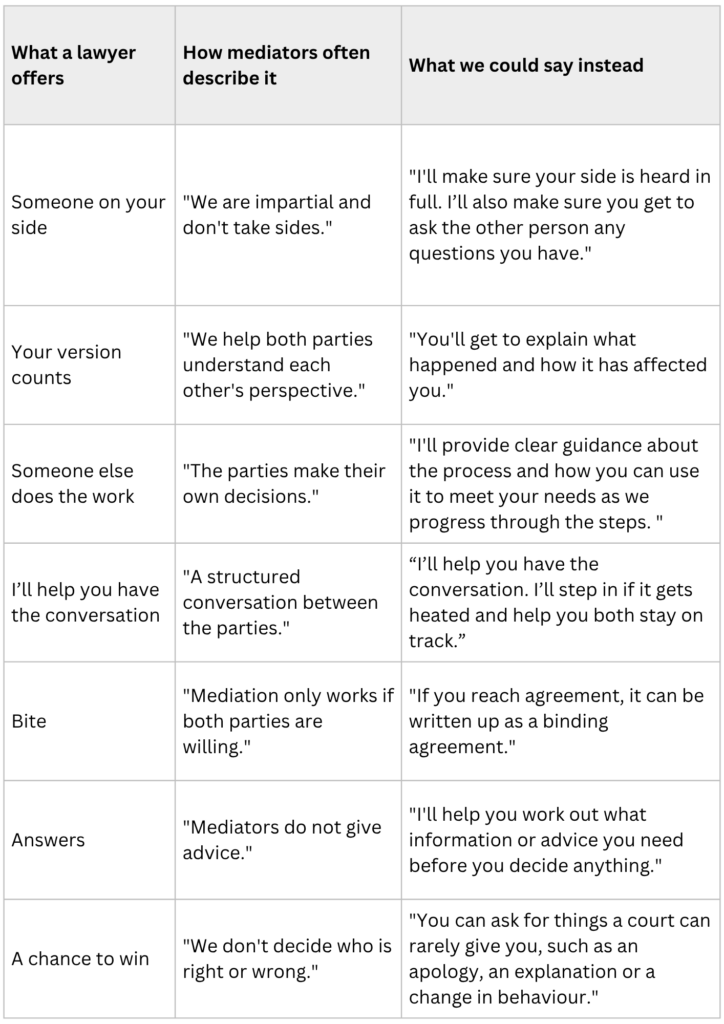
Don’t hand them a reason to say no. “Mediation only works if both people are willing” is true. On a homepage it invites the reply that the other person never will be willing. Explain instead what happens if the other person is unsure: who contacts them, what they are told and what happens if they decline. Tell them how first contact is handled, so they know whether the other person will learn they complained.
Write with some warmth. Stokoe found that callers heard silence and bare acknowledgements as a lack of interest. Acknowledge how the situation feels before you explain what you offer. “Living next to someone you can’t talk to is exhausting” is a better first line than “Mediation is a voluntary, confidential process.”
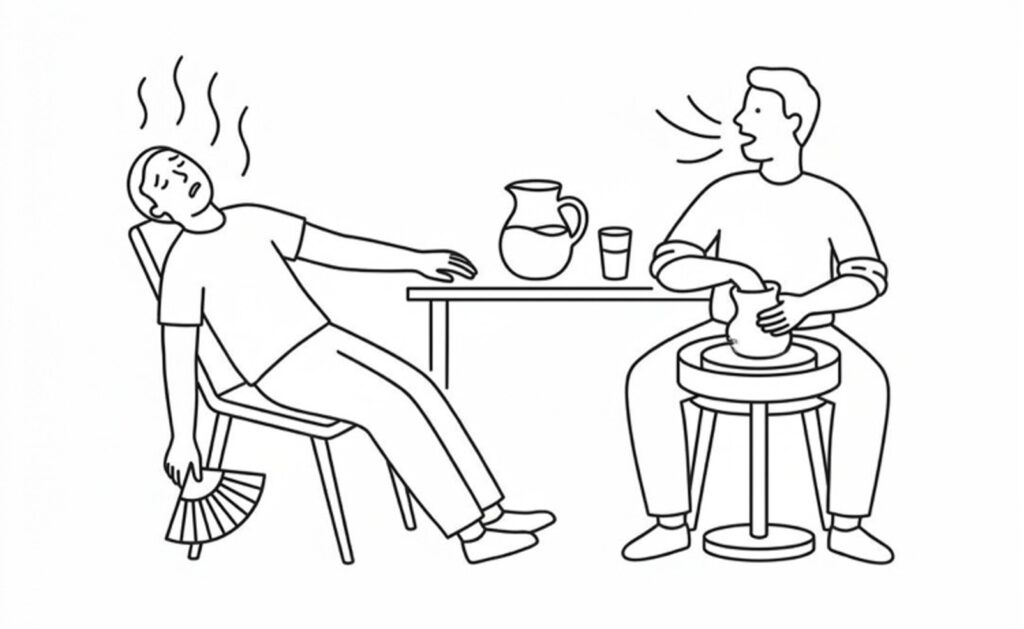
Explain what will be different. Most readers have already tried talking, or are afraid to. Say what the mediator adds. A private conversation with each person first to help them get clear about what’s going on and what’s most important to them. Keeping the joint discussion on track. Supporting people to put ideas forward in a way that the other person is most likely to hear.
Rethink the pictures. Skinner argued that doves and handshakes, two of the field’s most common images, give a false picture of what mediators provide. As she put it, “Conflict resolution does not sell the bridge, it is selling the mortar and the trowel.” Pictures of the work itself show people what they would be signing up for. That might be a mediator meeting with one person, or a plan written up on a whiteboard.
Test it on beginners. Ask someone outside the field to read your homepage. Then ask them what will happen if they call you, and how they would choose between you and another mediator. Better still, look at what people do. Which pages do they read before they make contact? Which enquiries go nowhere? What do callers ask that your website should have answered?
Complications without tidy answers
Selling and informing. Stokoe was open about a tension here. Mediators need to describe mediation accurately and fairly. They also need clients, who may not like the sound of it. Wording that gets people in the door by playing down the two-sided nature of mediation may cost trust once they arrive.
Two audiences. Many mediators are hired by people who know mediation well, such as lawyers, HR managers, courts and insurers. Websites written for them lead with credentials, panels and settlement rates. The party who has to agree to attend often reads the same page and knows far less. One page may not serve both.
The evidence. Stokoe’s calls came from UK community mediation services. Most were free, and most calls were about neighbours. I have not seen a study that tests mediation website wording against what people do next. Paid commercial, workplace and family services may see different patterns. Australian research would help.
Open questions
-
If a stranger read your homepage, could they tell you what would happen after they called?
-
How would a prospective client tell you apart from the mediator down the road?
-
Which of the words you value most would you keep on your first page, and which would you move further down?
-
Where does persuasion end and pressure begin in how we describe mediation?
-
If someone asks an AI tool what to do about a neighbour dispute, does it suggest a mediator or a lawyer? How does it describe each?
Such an insightful article, Sam. Thanks for writing and sharing it.